

Big Money
- Lynn Brooke
- Jan 16, 2024
- 4 min read

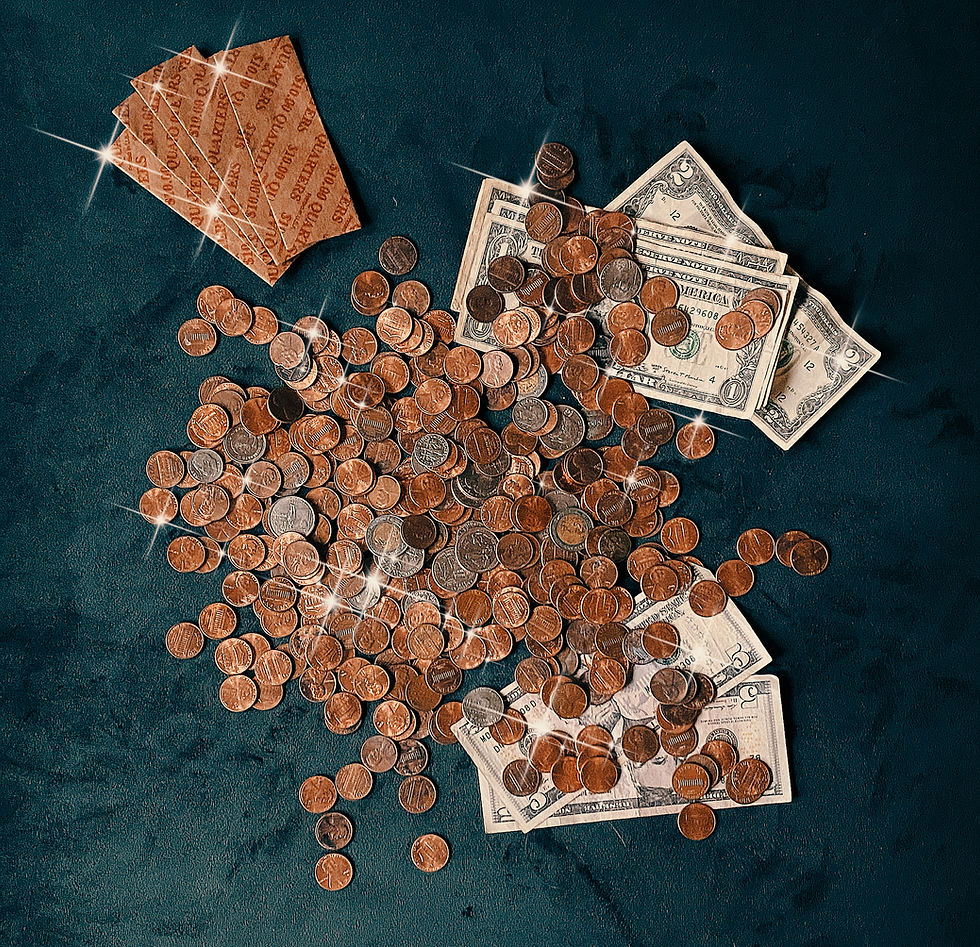
Three of my best friends, now deceased, could be defined as wanting Big Money.
There aren’t a lot of ways to have or get Big Money.
Real estate
Lawsuit settlements, which typically require a major mental or physical loss
Extraordinary talent
Jackpot
Inheritance
I am comfortable. I don’t have big money, but can usually buy what I want, if it is not extravagant and I live low-key. I don't want much in physical trappings.
I am proud of what I have. I am also grateful for the decisions we made to ensure our care and comfort as we aged. There were no Big Money grantors. We worked long hours, earned money and didn't spend it all.
I observed my friends' spending habits and attempts to get Big Money.
One finally had a pallet fall on her from Home Depot or one of those large hardware stores. I don’t think the payout was a lot. The money didn’t last long.
Another made good money and sunk what savings there were into a get-rich scam.
Another had a good job and left it to chase sales with timeshare. You have to produce in any way or means possible to get big money there. It didn't happen.
What I observed was these wonderful people spending almost all of their incomes having a fine time. As they became older, they had no savings or reserves. They were in a mess. They had to keep working when they should have been thinking about retirement. They were still on the job when they died, although they did die young, in their late 60s and early 70s.
I still see acquaintances who, in my opinion, made poor financial decisions and are now in perilous situations. They have no safety net for when disaster or illness descends upon them and still spend every dollar all that comes in.
I didn’t know anything about money when I landed my first full-time, low pay job. I just knew that you had to have money to live, which I did, paycheck to paycheck and sometimes borrowing a few bucks from the gas station man to tide me over for the pay period.
Early in our acquaintance, my wife asked if I balanced my checkbook. I laughed and told her I didn’t have enough to balance. She got on to me and demanded I balance my checkbook. This was an order. I complied. When she gave an order, everyone had better do what she said. I accounted for what I did have and how it was spent. She didn’t want to know what my financial situation was, but she wanted me to know.
She eventually became my lover and wife.
She emphasized “take care of the pennies and dollars will take care of themselves.”
We started a business and she demanded that books balance to the penny. If even one penny was off, it had to be found. She said it could be
$ .01
$ 1.00
$ 10.00
$ 100.00
And so on.
And just like that, a lot of money could be gone with nobody even being aware of it until bad things happened, like checks bouncing.
She also would not spend. She would drive the wheels off of a car before she bought a new one. She would research best buys in cost and quality before making major purchases. She would only pay cash for most things and would save until she could afford that particular thing.
She would spend on essentials and thoroughly enjoy when she would find something she really wanted. She would pay her part of the check when we would eat out, or even pick up the bill. She wasn’t stingy, just careful.
She insisted on wise investments and never chose high-risk plans.
I guess I met her criteria early on as a good investment. I was paying my way through school and working while everyone else was partying. I realized not every field of education pays off and chose one that did.
She taught me lessons in finance, which I follow to this day. The major lesson? Don’t spend.
I can be funny about not spending and choosing what to buy. I buy a large 2-liter soda and transfer it into six small bottles. With every purchase, I try to save two dollars, taking care of the pennies while the dollars add up.
I find following financial axioms, which are generally accepted practices, translate into grieving, although in reverse. My psychologist friend constantly advised me “emotions contained will result in disease. Express them. Don’t hoard.”
I write a lot about my grief. I also have episodes of grief, when I let tears flow. One thing about grieving, I never know what might trigger it.
I implement the advice of my wife about finances and psychologist friend about emotions. Take care of the pennies, the dollars will take care of themselves.
If I have a grief trigger, I express it. At this point in my grieving process it doesn’t last long. Crying and putting it into perspective is a good plan. If I am at Walmart and get triggered, I usually don't do that and, fortunately, it doesn’t happen nearly as often as it did.
In the past, if I tried to contain grief, it built up until I had a meltdown. This happened when I finally released my wife to her mother at the first de los Muertos 18 months ago.
It has happened with other emotions. I try to express them now and overcome the lifelong protective armor of withholding.
I hear their advice, take care of the tears (the pennies) as they happen.
The meltdowns are less likely to happen (dollars taking care of themselves)
and are deposits in the bank of emotional health.
Let me know how you are doing. I care.
Contemplation: Can following financial principles actually assist with recovering from grief?
Sincerely,
Lynn Brooke
© 2024 Our New Chances
Photo Credit: © 2024 Rachel Gareau


Comments